
Urushi vs. Epoxy Resin: Why Japanese Tradition Leads the Art of Repair in 2026

Updated: Jun 17
Published on Kintsugi.art Filed under: Materials & Techniques

You want to get started with Kintsugi. You come across an epoxy repair kit for just a few euros on online marketplaces, delivered in two days, complete with shiny gold powder and four-step instructions. Then you discover ki-urushi: a €35 bottle, several days of curing time, a humidity box to build, and warnings about possible allergic reactions.
The question naturally arises: is urushi really worth the effort?
In 2026, the answer is yes. More and more hobbyists, ceramic artists, craftspeople, and creators around the world are reaching the same conclusion.
Urushi: 9,000 Years of Japanese Craftsmanship
Urushi lacquer is far from a modern invention. Evidence of its use in Japan dates back nearly 9,000 years, where it was employed to create bowls, weapons, temples, musical instruments, and to repair objects considered worthy of preservation.
Urushi is derived from the sap of Toxicodendron vernicifluum, commonly known as the lacquer tree, which is cultivated primarily in Japan, China, and Korea.
Harvesting the sap is a delicate process. Small incisions are made in the bark, allowing the milky gray sap to be collected, filtered, refined, and carefully dehydrated until it becomes translucent. This labor-intensive artisanal process is one of the main reasons for its relatively high cost.

Its chemical behavior is particularly fascinating. Unlike most materials, which cure by losing moisture, urushi polymerizes through exposure to humidity. This is why a muro (or furo) a curing chamber with controlled humidity (typically 75–80% relative humidity and 25–30°C) is essential to the process.
Fresh urushi contains approximately 60% urushiol, the active compound responsible for the allergic skin reactions some people may experience. Before curing, contact with urushi can trigger Rhus dermatitis in sensitive individuals. Once fully cured and hardened, however, it loses its toxicity entirely and becomes biologically inert, which is why it has been safely used on tableware and food vessels in Japan for centuries.
In traditional Kintsugi, each stage relies on a different preparation of urushi lacquer:
Mugi urushi (ki-urushi mixed with wheat flour) for the initial bonding of broken pieces.
Sabi urushi (ki-urushi mixed with tonoko clay powder) to fill chips, gaps, and missing areas.
Roiro urushi for the final finishing layers, providing a smooth, deep, lustrous surface.
E-urushi as the adhesive layer used to apply gold powder.
It is this layered body of knowledge refined and codified over centuries that gives urushi-based Kintsugi its unique material integrity and philosophical coherence.
What Is Urushi in Kintsugi?
In traditional Kintsugi, each stage relies on a different preparation of lacquer:
Mugi urushi (ki-urushi lacquer + wheat flour) for the initial bonding.
Sabi urushi (ki-urushi lacquer + tonoko clay powder) to fill missing areas.
Roiro urushi for the finishing layers, smooth and deep.
E-urushi for applying the gold powder.
It is this layered body of knowledge, codified over centuries, that gives urushi Kintsugi its material and philosophical coherence.
Epoxy in Kintsugi: Practical, but at What Cost?
To be fair, epoxy resin has allowed thousands of people to discover Kintsugi who might otherwise never have encountered it. In that sense, it has played a genuine role in making the practice more accessible.

Much of its popularity, however, can be attributed to social media. Epoxy kits produce highly photogenic results: bright golden lines on a ceramic piece repaired in a single weekend. It’s undeniably appealing.
And for a one-off decorative project with no food-contact use, epoxy may be sufficient.
Things become more complicated, however, when you take a closer look.
Can Something Repaired with Epoxy Really Be Called “Kintsugi”?

ou, pour une légende d’image plus naturelle :
Ceramic Repair with Gold-Colored Epoxy Resin
It’s a question that often sparks debate, yet it deserves to be asked plainly.
The word kintsugi (金継ぎ) literally means “golden joinery.” Historically, it refers to a specific technique that emerged in Japan during the Muromachi period (14th–16th centuries), using urushi lacquer as both an adhesive and a finishing medium, enhanced with genuine gold powder. It is not a style. It is not an aesthetic. It is a codified material process, passed down from master to apprentice for centuries..
Reassembling a broken ceramic piece using epoxy resin enhanced with decorative gold glitter may draw visual and symbolic inspiration from Kintsugi, but it is not Kintsugi in the strict sense of the term. Japanese artisans and cultural institutions are quite clear on this point: the designation “Kintsugi” implies the use of urushi lacquer.
According to Web Japan, an official publication of the Japanese Ministry of Foreign Affairs, the Kintsugi technique “uses only natural materials such as urushi lacquer produced in Japan.” This institutional definition leaves no room for synthetic adhesives.
This does not mean that epoxy-based repair is without value. It has its place, particularly as an entry point to the practice, as a creative exercise, or for individuals who cannot handle urushi due to a confirmed allergy. However, in the interest of accuracy and respect for a tradition that spans several centuries, it would be more appropriate to refer to it as “golden repair,” “Kintsugi-inspired repair,” or “contemporary epoxy Kintsugi,” rather than simply Kintsugi.
At Kintsugi.art, we believe this distinction is not a matter of purism it is a matter of honesty. And it is precisely this honesty that helps those discovering the practice understand what traditional Kintsugi truly is, and what they may ultimately aspire to learn.
From a chemical standpoint, standard epoxy resin is a petrochemical-derived material. Its basic formulation is typically based on Bisphenol A (BPA) or Bisphenol F (BPF), endocrine-disrupting substances whose presence in food-contact materials led the European Union to ban BPA in all food-contact materials from January 20, 2025.
This decision, based on findings by the European Food Safety Authority (EFSA), which significantly lowered the tolerable daily intake for BPA, has major implications for epoxy Kintsugi kits marketed as “food safe.” Today, such claims deserve careful scrutiny, and many low-cost kits may no longer comply with current European regulations.

From an aesthetic standpoint, epoxy ages poorly. It tends to yellow when exposed to UV light, loses its clarity over time, and may crack on pieces subjected to temperature fluctuations. The golden line that looked brilliant when the repair was first completed can become dull after a few years. Urushi, by contrast, develops greater depth with age. Japanese artisans speak of nure-tsuya (“wet gloss”), a living patina that becomes richer through use and the passage of time.
From a philosophical perspective, epoxy-based Kintsugi is often reduced to a cosmetic gesture: the break is concealed beneath a golden appearance. Urushi Kintsugi, on the other hand, is an act of care. The object is rebuilt using the same materials and techniques that Japanese artisans would have employed four centuries ago.

Direct Comparison: 5 Essential Criteria
1. Health and Safety
Fresh urushi contains urushiol, a compound that can cause allergic skin reactions before curing. This is the main limitation to be aware of and should be taken seriously (nitrile gloves, long sleeves, and a well-ventilated workspace are recommended). Once fully cured, however, urushi is harmless.

Epoxy resin releases volatile organic compounds (VOCs)—chemical substances that may be emitted into the air during handling and curing. Its base components, particularly Bisphenol A (BPA) and Bisphenol F (BPF), have raised health concerns due to their potential effects on the endocrine system. BPA is now prohibited in food-contact materials in Europe. Even products marketed as “BPA-free” warrant careful review of their technical specifications before being used on tableware.
Advantage: Urushi, provided that appropriate handling precautions are followed.
2. Aesthetics and Durability of the Repair
Urushi develops a rich patina over time. Its color evolves and deepens, allowing the repair to age naturally alongside the ceramic piece itself. When properly executed, an urushi repair can last for decades—or even centuries—as demonstrated by numerous Japanese museum pieces.
Epoxy, by contrast, tends to yellow under UV exposure, can crack when subjected to repeated thermal shocks, and gradually loses its clarity. The aesthetic lifespan of an epoxy repair is measured in years rather than generations.
Advantage: Urushi.
3. Ethics and Environmental Impact

Urushi is a renewable plant-based resin harvested from trees cultivated according to centuries-old agricultural practices. Its production remains largely local and artisanal. Once cured, it is biodegradable.
Epoxy resin, by contrast, is a product of the petrochemical industry. It is non-biodegradable, and its manufacture involves energy-intensive chemical processes. Liquid epoxy waste and uncured residues are generally classified as hazardous waste.
At a time when the slow craft movement and environmental awareness among makers and artisans continue to grow, this criterion is becoming increasingly important.
Advantage: Urushi.
4. Authenticity of the Practice
Urushi Kintsugi belongs to a direct cultural lineage that traces back to the Japanese artisans of the Muromachi period. It respects the traditional materials, techniques, and the wabi-sabi philosophy, which embraces imperfection and views repair as an integral part of an object’s history.
Epoxy Kintsugi is a modern adaptation that borrows the aesthetic without fully embracing the underlying materials, methods, or cultural context. This is not necessarily a drawback for a personal decorative project, but it represents a fundamentally different approach.
Advantage: Urushi for anyone seeking a practice that is both coherent and deeply rooted in tradition.

5. Accessibility and Cost
This is the one criterion where epoxy clearly comes out ahead. An epoxy Kintsugi kit typically costs between €10 and €30, requires no specialized equipment, and can produce visible results within 72 hours. By contrast, ki-urushi lacquer involves a higher initial investment, additional materials (muro, lacquer, tools, tonoko clay powder), and a steeper learning curve.
Advantage: Epoxy for immediate accessibility. However, this gap narrows considerably once you begin practicing regularly.
Why 2026 Marks a Turning Point for Urushi
Several converging trends are bringing urushi into the spotlight this year.
European regulations removed BPA from food-contact materials in 2025. For Kintsugi practitioners repairing tableware intended for everyday use, this decision raises legitimate questions about uncertified “food-safe” epoxy kits. Urushi biologically inert once cured and used on tea bowls and tableware for centuries naturally emerges as a compelling alternative.
The slow craft movement also continues to mature. After years of fast DIY projects and instant gratification, a growing number of makers and artisans are seeking practices that are slower, deeper, and rooted in genuine craftsmanship. Urushi Kintsugi responds precisely to that aspiration.
The growing international recognition of Japanese lacquer masters is also helping to reposition urushi as a material of excellence. Exhibitions, artist residencies, workshops, and training programs across Europe and North America are attracting an increasingly broad audience to authentic Kintsugi practice.
In France in particular, demand for traditional Kintsugi materials ki-urushi, traditional tools, tonoko, jinoko, and gold powder—continues to grow year after year, reflecting a desire among practitioners to move beyond introductory kits and engage more deeply with the craft.
A Side Note: What Exactly Is “Slow Craft”?
You may have come across the term without ever really knowing what it means. Slow craft is a cultural movement that emerged alongside other slow movements, such as Slow Food, which originated in Italy in the 1980s, followed by Slow Travel, Slow Living, and others.
The central idea remains the same: to deliberately slow down in a world that keeps accelerating, and to rediscover meaning through making.
Applied to craftsmanship and creative work, slow craft emphasizes three key principles:
Taking the long view valuing process over speed and resisting the pursuit of instant results.
Using authentic materials natural, traceable, and durable resources.
Transmitting know-how learning from established traditions rather than improvising shortcuts.
In France, a related concept is “Slow Made,” an initiative officially launched in 2012 with the support of the French National Furniture Collection (Mobilier national) and the Ministry of Culture. According to its founders, Slow Made seeks to “restore the value of time in order to produce better, work better, and consume better.” It can be seen as a French interpretation of the slow craft philosophy.
If you are looking for simple French equivalents:
Slow craft → artisanat lent or craftsmanship practiced at a slower pace
Slow Made → Slow Made (official French designation) or made with time and care
In this sense, urushi Kintsugi is one of the purest expressions of slow craft: a living material, ancestral techniques, patience as a prerequisite, and a result that grows more beautiful with age. It is no coincidence that these two movements are increasingly connected today.
The Real Limitations of Urushi and How to Overcome Them
Speaking honestly about urushi also means acknowledging its challenges. Here are the three main ones and how they can be addressed.
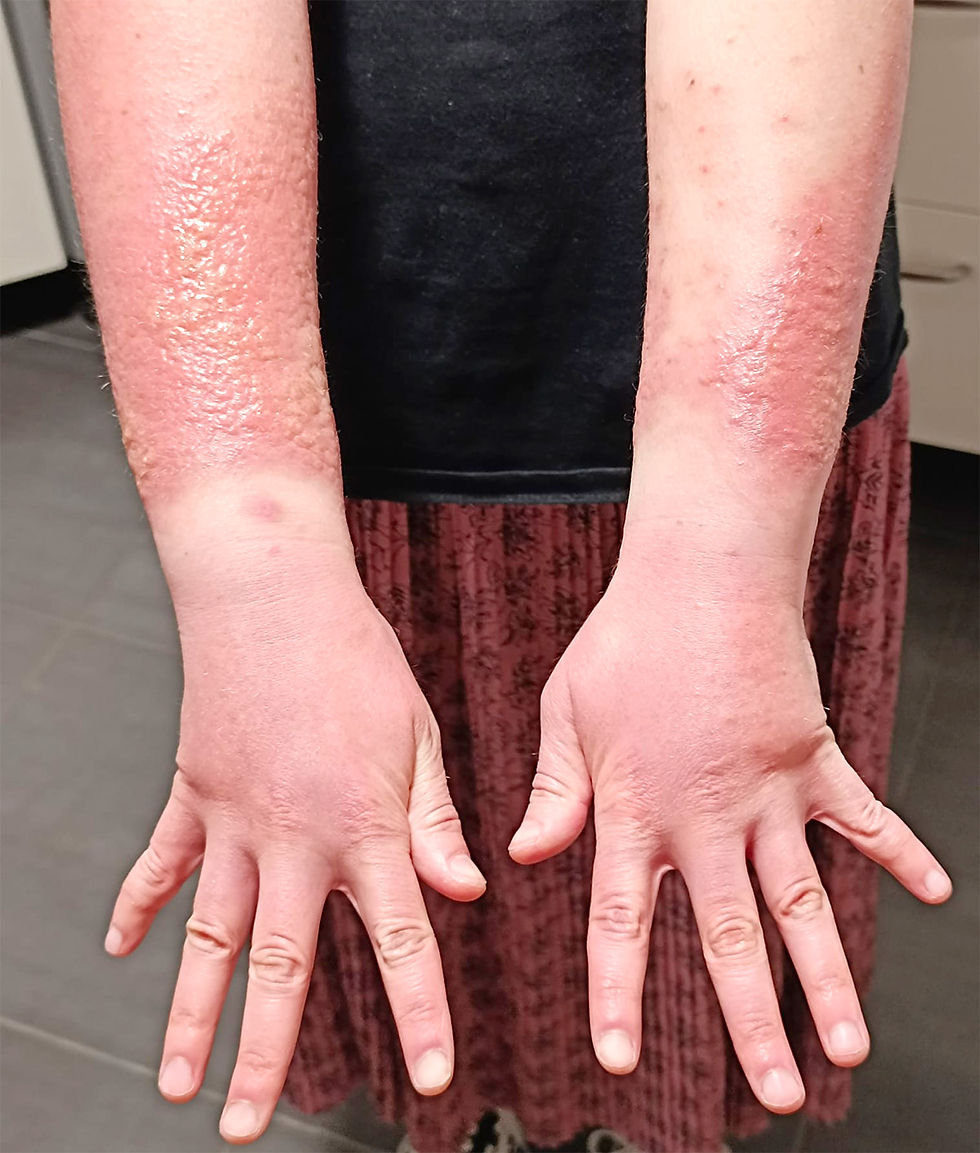
Allergic reactions. The urushiol contained in fresh urushi lacquer can cause skin reactions, sometimes significant, in sensitive individuals. This risk is real and should not be underestimated. Fortunately, the precautions are simple and effective: wear nitrile or vinyl gloves, long sleeves, a mask, and work in a well-ventilated space. Once the lacquer has fully cured, the risk disappears.
Some people nevertheless prefer never to handle fresh urushi. In such cases, a high-quality epoxy resin that complies with the relevant safety standards remains a perfectly respectable alternative.
Time. Urushi Kintsugi is not a weekend project. Each layer requires several days of curing in a muro (or furo), and a complete restoration may take several weeks from start to finish. It is a practice that demands patience and that is precisely where much of its value lies.
If you are looking for a quick result for a one-off project, epoxy will likely be the more suitable option.
Equipment. A muro (or furo), appropriate tools, tonoko for making sabi urushi, and different types of lacquer for the various stages of the process the initial setup requires both equipment and a willingness to learn. However, our detailed video tutorials guide you through every step, including how to build a simple homemade muro using readily available materials, making the practice far more accessible than it may first appear.
Wabi-Sabi: Where Urushi and Epoxy Truly Part Ways
Urushi and epoxy can be compared according to technical criteria—health, durability, cost, and environmental impact. But the real dividing line between them is not chemical. It is philosophical.

Wabi-sabi (侘寂) is one of the central aesthetic concepts of traditional Japanese culture. It refers to the ability to perceive beauty in imperfection, asymmetry, and impermanence. Rooted in Zen Buddhism and closely associated with the tea ceremony as codified by Sen no Rikyū in the sixteenth century, wabi-sabi does not seek to correct what is irregular or worn. Instead, it regards such qualities as authentic traces of the passage of time.
A bowl with slightly asymmetrical edges, a glaze that has flowed unevenly, or a repaired chip are not seen as flaws they are signs of life.
Kintsugi emerged from this worldview. It is not a technique for concealing damage.
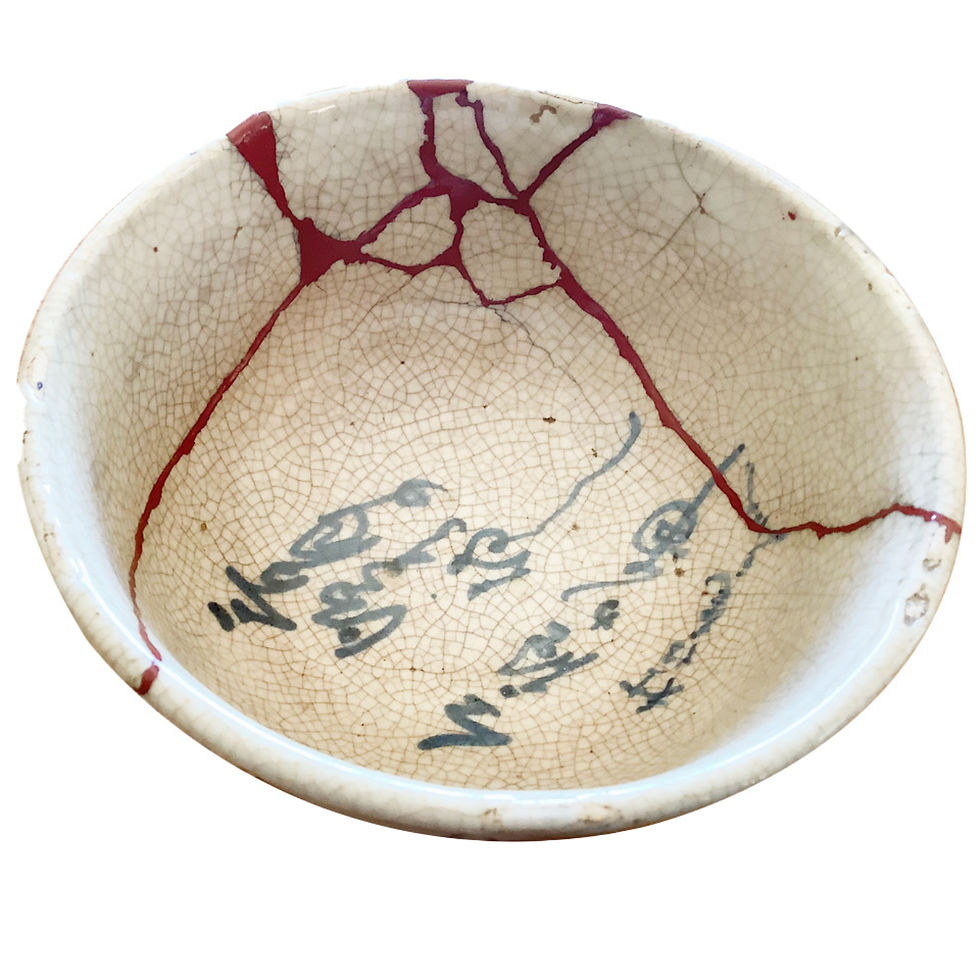
It is an affirmation that the break is part of the object’s history, and that this history deserves to remain visible. Slow, layered, and living, urushi repair embodies this principle in the very nature of the material itself. Urushi ages, deepens, and evolves over time. The repaired object continues to exist through the years not despite its scar, but with it.
By contrast, epoxy resin produces something fundamentally different. It fixes the repair in a static, glossy, and uniform state. It does not age gracefully; it deteriorates. It does not become integrated into the aging of the object but rather stands apart from it. Above all, it conceals the break beneath a seemingly perfect surface. In the wabi-sabi sense of the term, this is not Kintsugi it is cosmetic restoration.
There is another Japanese concept that helps illuminate this distinction: mono no aware (物の哀れ), often translated as “the gentle melancholy of things.” It is the awareness that everything is transient, that objects and living beings alike have a limited lifespan, and that this impermanence rather than being a source of sadness is precisely what gives them their beauty and significance.
Urushi Kintsugi is deeply connected to this sensibility. It accepts that an object has been broken, that it bears marks of its history, and transforms those marks into something precious rather than attempting to erase them.
Epoxy, by contrast, often pursues an immediate and visually perfect result. In that sense, it reflects a more familiar Western impulse toward perfection: correcting, smoothing, and making things appear new again. This is not a moral judgment. It is simply a different philosophy one that is fundamentally at odds with the spirit of wabi-sabi.
Choosing urushi, therefore, means choosing far more than a material. It means embracing a worldview in which imperfection is honored, where the passage of time leaves meaningful traces, and where repairing an object can be every bit as significant as creating it.
Verdict
Epoxy resin is not the enemy of Kintsugi. It has introduced many people to the practice, and for a decorative project with no food-contact use, it can certainly have its place.
But if you are looking for a practice that is materially sound, aesthetically durable, philosophically consistent, and faithful to the Japanese tradition from which Kintsugi emerged, urushi has no serious competitor.
In 2026, with evolving regulations, the continued rise of the slow craft movement, and a community of practitioners that is becoming increasingly discerning, this is no longer simply a purist’s opinion. It is the conclusion reached by many who have practiced both methods and never looked back.
Ready to Start Working with Urushi?
Discover our selection of ki-urushi lacquer, beginner kits, and detailed video tutorials designed to guide you through every stage of the process—from preparing mugi urushi to applying the final gold finish.
Kintsugi Art® is a registered trademark protected in France through the Institut National de la Propriété Industrielle (No. 19 4 537 437) and throughout the Member States of the European Union through the European Union Intellectual Property Office. Any reproduction is prohibited without the prior written authorization of Kintsugi Art.


Comments